
About Hanasaki Line
Scroll Down

Photography by Yasuyoshi Ohtaki
Linking Hokkaido’s Kushiro and Nemuro is the Hanasaki Line,
where Earth’s splendor unfolds.
A local line that takes about 2.5 hours one way, stretching 135 km.
This route makes up part of the JR Nemuro Line.
Known affectionately as the Hanasaki Line,
it has captured hearts with sweeping natural vistas and
scenic beauty passing by its windows.

Beyond the train windows unfold breathtaking scenes woven
by nature—the Bekanbeushi Wetland and Akkeshi Bay.
Glimpses of everyday life are revealed with cattle grazing in Attoko and kelp laid out to dry in Ochiishi.
At times, wildlife such as Yezo sika deer and wild birds quietly grace us with their presence.
As you surrender to the train’s gentle sway,
savor landscapes rich with untouched natural beauty distinct to eastern Hokkaido.
Each station the train pulls into also offers its own delights.
And each region brims with unique charm—Akkeshi Town’s famed oysters,
activities in Hamanaka Town’s Kiritappu Wetland, and Hanasaki crab, the pride of Nemuro City.
Before you reach Nemuro Station, the easternmost in Japan, enjoy a leisurely journey dotted with stopovers along the way.
More than a means to get from A to B, the journey becomes the destination on the Hanasaki Line, where Earth’s splendor unfolds.
Here awaits a special trip, one that invites you to linger over the nature and culture of eastern Hokkaido.

Photography by Yasuyoshi Ohtaki
Filled with anticipation,a rail journey begins
A two-car train quietly awaits as I stand on the platform at Kushiro Station. My heart flutters with excitement at the words “Hanasaki Line, where Earth’s splendor unfolds” displayed on the electronic signboard. At last, my journey is about to begin. Around me are travelers with large suitcases and chattering tour groups. Everyone boards the train with excitement painted on their faces. The train sets off, carrying with it the anticipation of its passengers.

Photography by Yasuyoshi Ohtaki
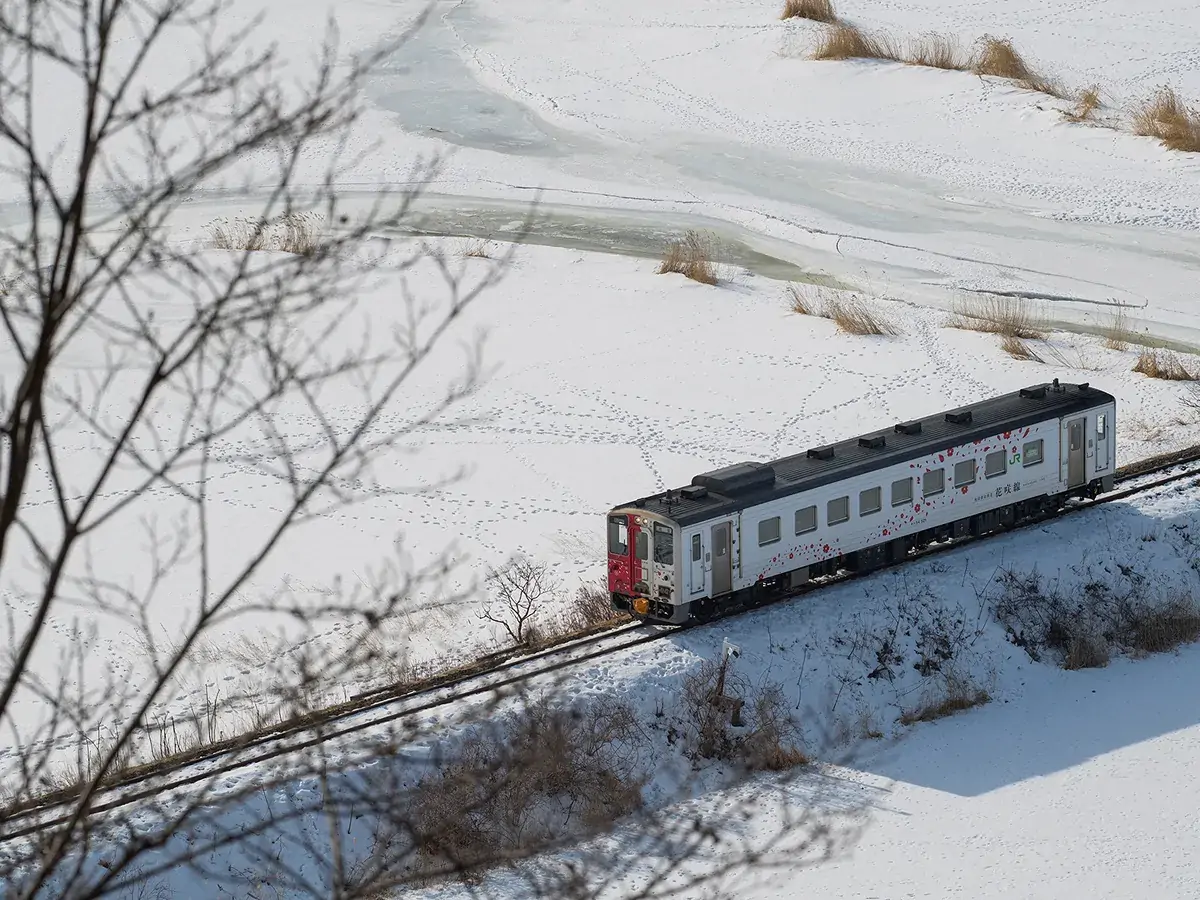
The trains on the Hanasaki Line feature various designs. While the KIHA-54 series with a red stripe is the primary model in operation, you may also encounter the rarer blue and white KIHA-54 series. There are also trains that uniquely represent this line.
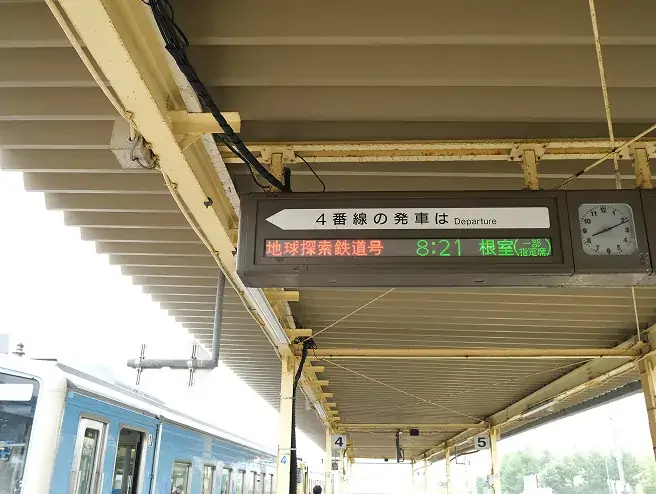
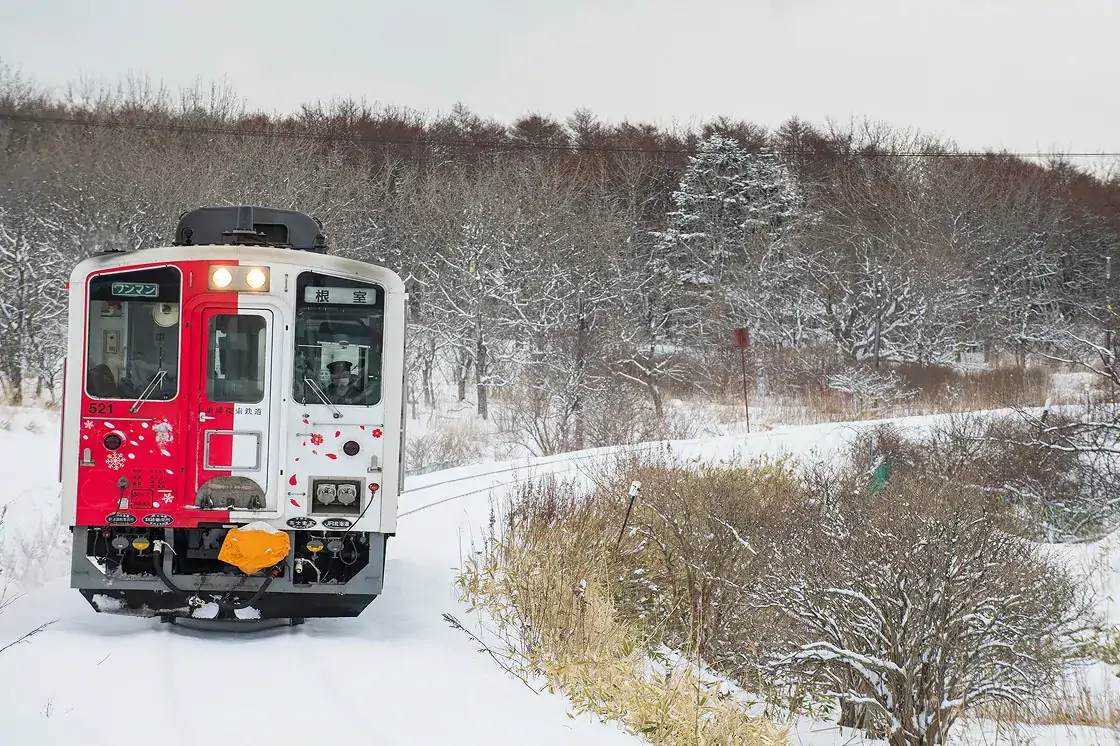
The Hanasaki Line Wrapped Train, operating since 2018, features a red and white two-tone color scheme inspired by flowers and snow. I hope one day I can ride this train with its vibrant colors, which are sure to stand out brilliantly against the natural landscape.
Surrender tothe gentle sway andlose yourself in the viewfrom the window
After leaving the townscape behind and passing Higashi-Kushiro Station, the scenery begins to change. Buildings grow sparse, and from time-to-time trees brush gently against the train windows. In the forest, I even spot a mother deer and her fawn. Looking around the carriage, everyone seems absorbed by the view outside.“Deer—how cute!” “We should be able to see the ocean soon.” Cheerful voices drift through the air, and some passengers jot notes onto their maps. Taking time to savor the passing scenery is one of the true pleasures of traveling by train.

Photography by Yasuyoshi Ohtaki
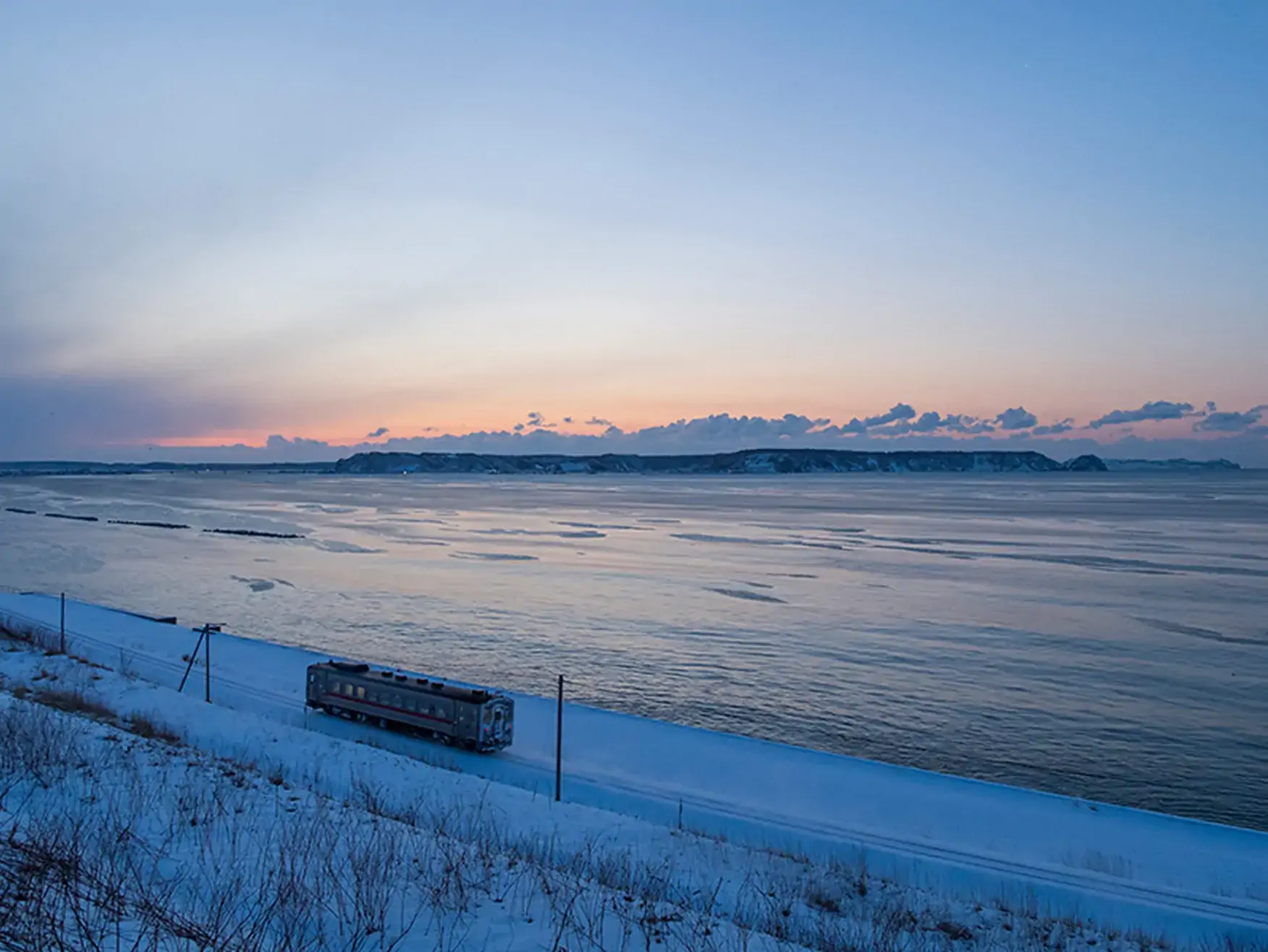
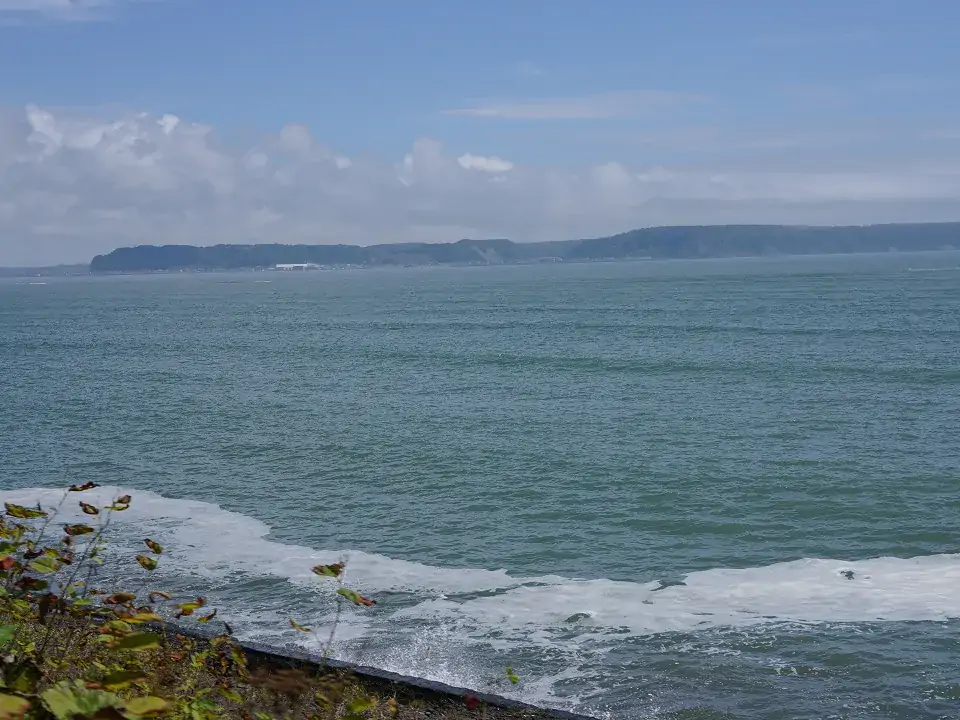
Just after Oboro Station, an announcement invites passengers to enjoy the view from the window as the train gradually slows. Spreading out before us is Akkeshi Bay. A soft murmur of delight ripples through the carriage, filling it with a quiet sense of excitement. There is an audio guide available that passengers can use to further deepen their appreciation of these breathtaking views.

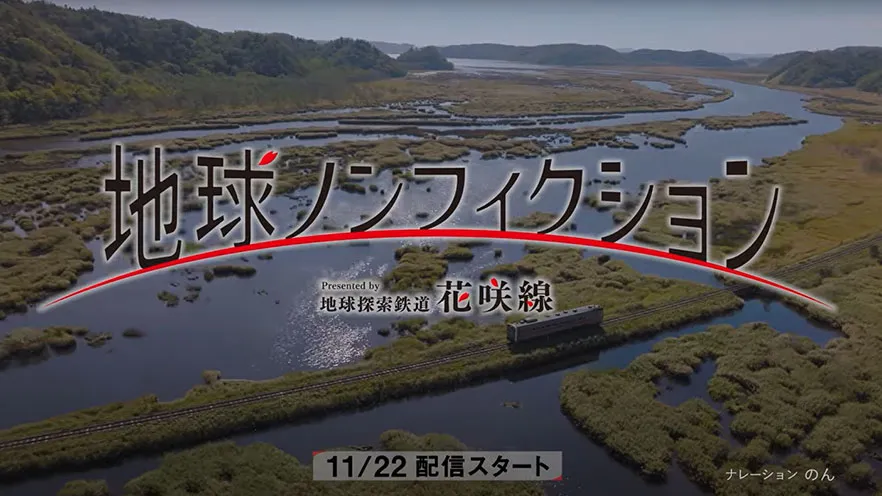
Journey into Earth’s Truth Trailer
Journeying to breathtaking vistas wovenby untouched nature
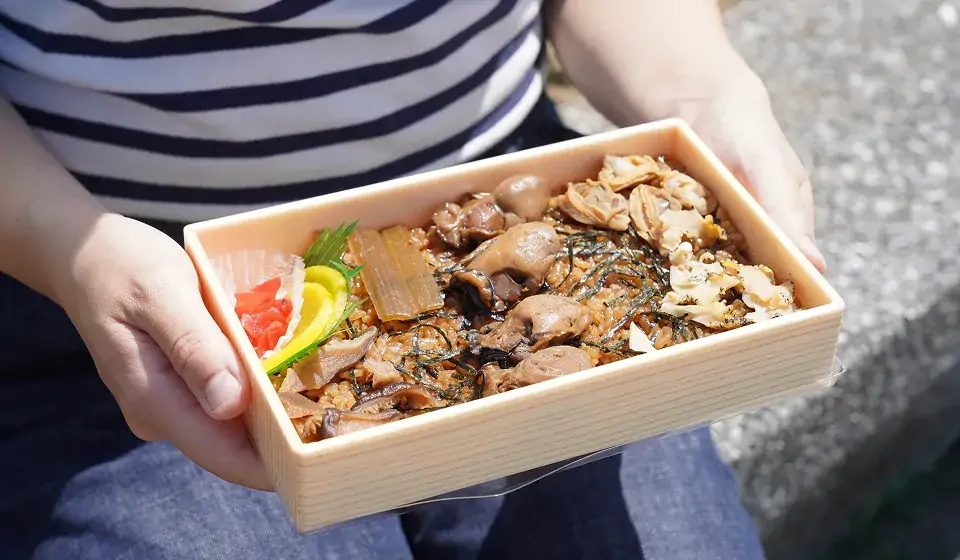
Next, we arrive at Akkeshi Station. The highlight here is the famous local ekiben (railway station packed lunch) called Ujiie Oyster Rice Bento. With an advance reservation, it is delivered right to the platform when the train arrives. The stop is brief—just one minute. Heart pounding, I step off the train and successfully collect my order in time. Back in my seat, I eagerly unwrap the package. Inside is a generous assortment of ingredients that capture the essence of Akkeshi: oysters, clams, and whelk. One bite with the seasoned rice, and the gentle sweetness of the sauce and the rich umami of the oysters come rushing through.


Photography by Yasuyoshi Ohtaki
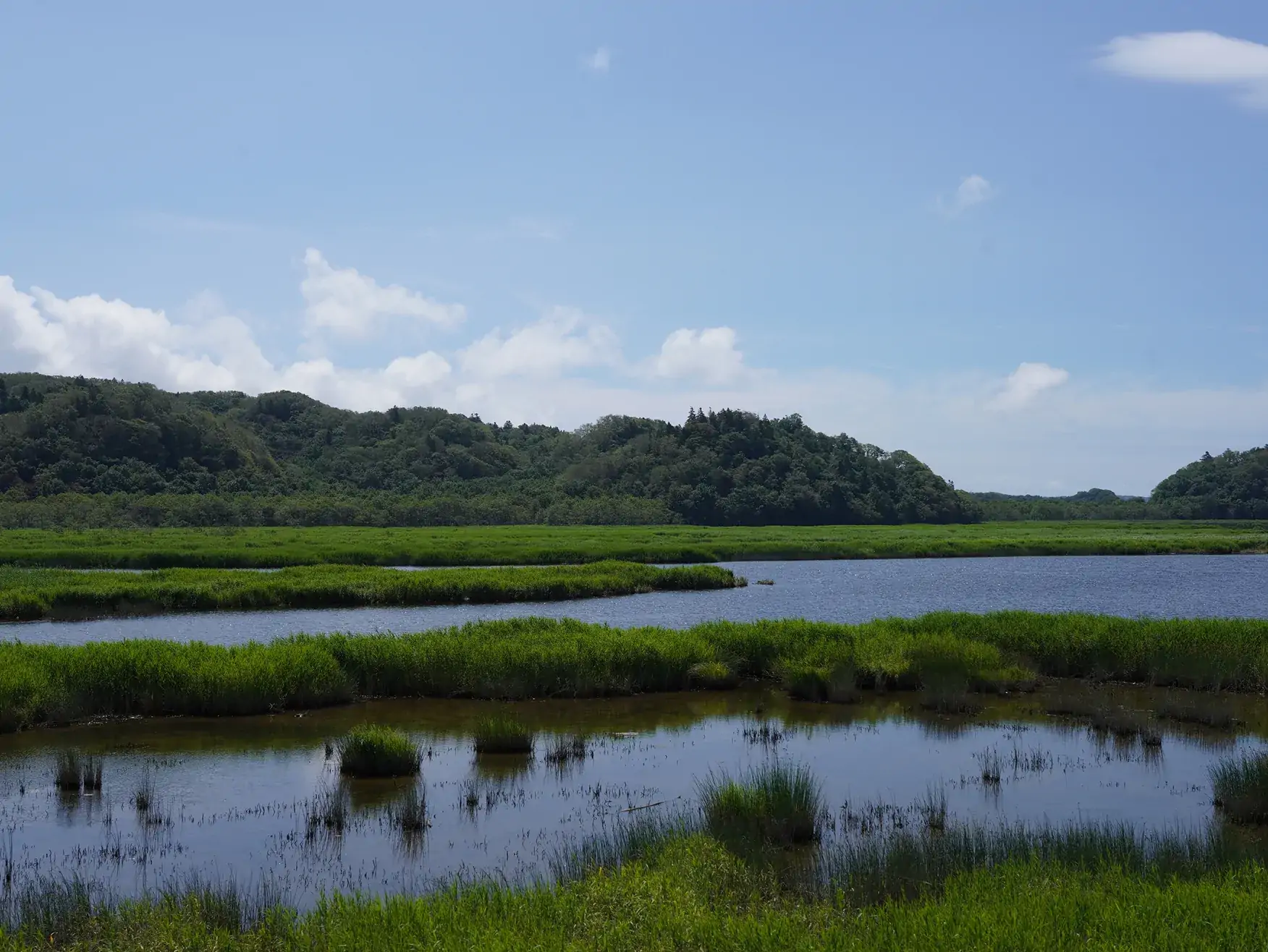
Still, it’s hard to keep my attention solely on the bento. Beyond Lake Akkeshi stretches the Bekanbeushi Wetland, a low-moor registered under the Ramsar Convention. It is home to wildlife, such as red-crowned cranes, white-tailed eagles, and brown bears. Vivid, deep greens blend with gently rippling waters in a patchwork landscape, while wild birds occasionally appear, soaring freely across the sky. The untouched natural scenery creates a dreamlike vista of breathtaking beauty. Here too, the train slows down, inviting us to fully take in the view.

Rather than simply admiring this magnificent nature from the train window, I want to experience it up close—to truly feel the wild beauty of eastern Hokkaido. Stepping off at Hamanaka Station, I set out to explore the Kiritappu Wetland under the guidance of Ms. Mayuko Takayama from LandEdge.
Landscapeswhere nature andhumans live in harmony
Unlike the Bekanbeushi Wetland earlier, this vast landscape is made up of a rich variety of wetlands spread across a wide area. There is Cape Kiritappu, where waves crash against the shore, and the Biwase Wooden Path, where delicate wildflowers bloom in abundance. Homes dot the area as well, a reminder of how everyday life exists in harmony with the surrounding wilderness. At the Biwase Observatory overlooking the wetlands, Ms. Takayama quietly reflects: “No matter the time, I’m moved all year round. You have forests, rivers, and the sea all here, and people cherish this land as part of their lives. There’s a beauty that never grows old.” Her words resonate deeply, and I can only nod in heartfelt agreement.
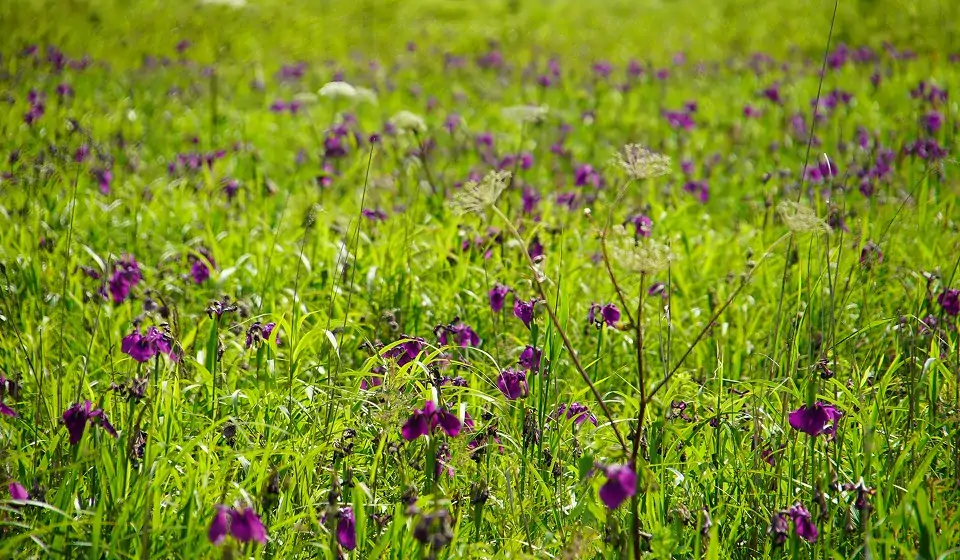
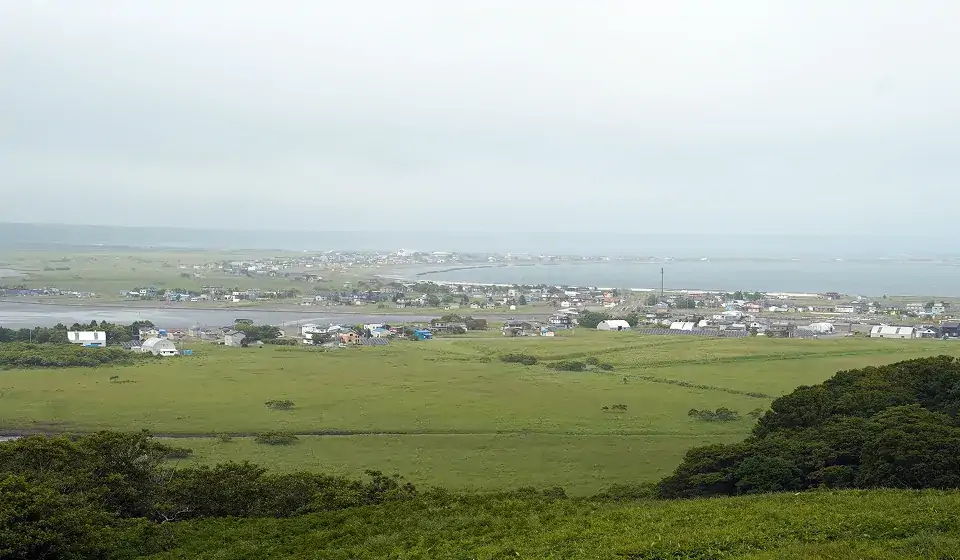
After departing Hamanaka Station, only a short stretch of my rail journey remains. Buildings begin to appear here and there, and I catch sight of cattle and horses grazing in open fields. Around Ochiishi Station, kelp can be seen laid out to dry. These scenes—shaped by both vast nature and the rhythms of everyday life—leave a lasting impression. As the landscape unfolds before me, I recall Ms. Takayama’s words and let my thoughts drift.

Photography by Yasuyoshi Ohtaki
Arriving at Nemuro,Japan’s easternmost point
At last, I arrive at Nemuro Station, the final stop on my journey. The bright, satisfied expressions of everyone stepping onto the platform speak volumes about how fulfilling this experience has been. On the station wall, the words “The easternmost station in Japan” come into view. So, this is it—I have reached the very edge of Japan. A quiet sense of accomplishment and wonder wells up as that realization sinks in.
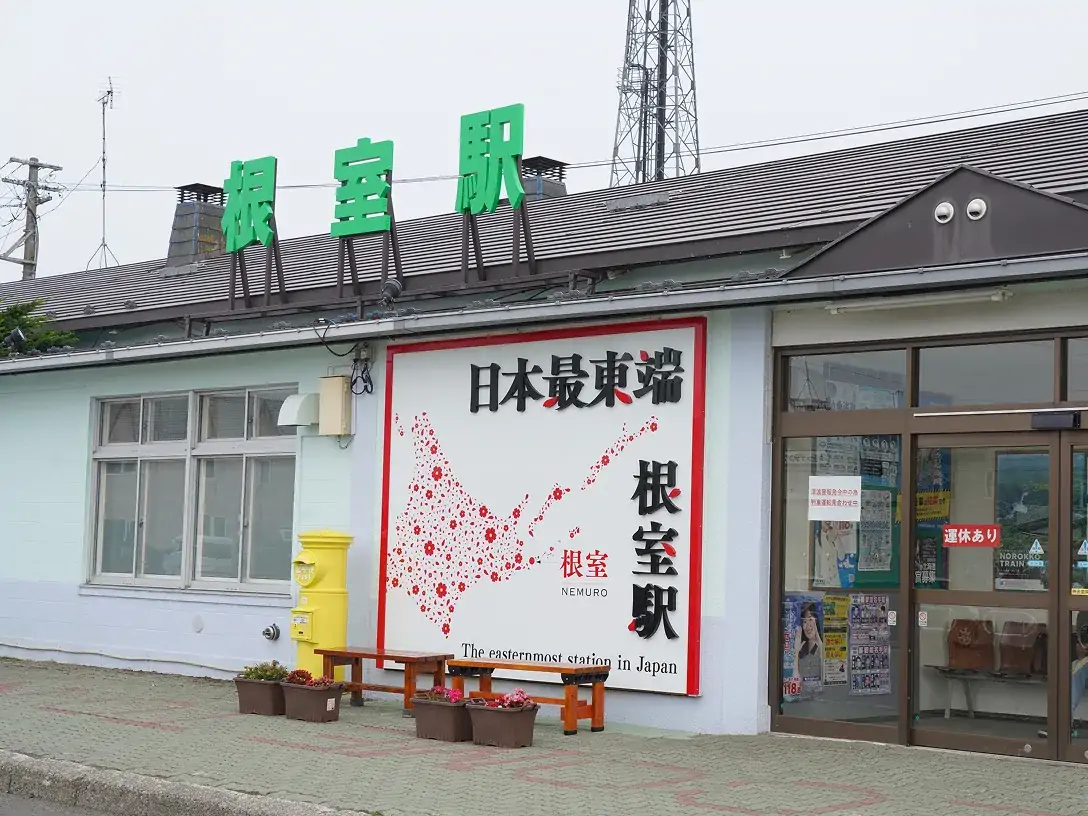
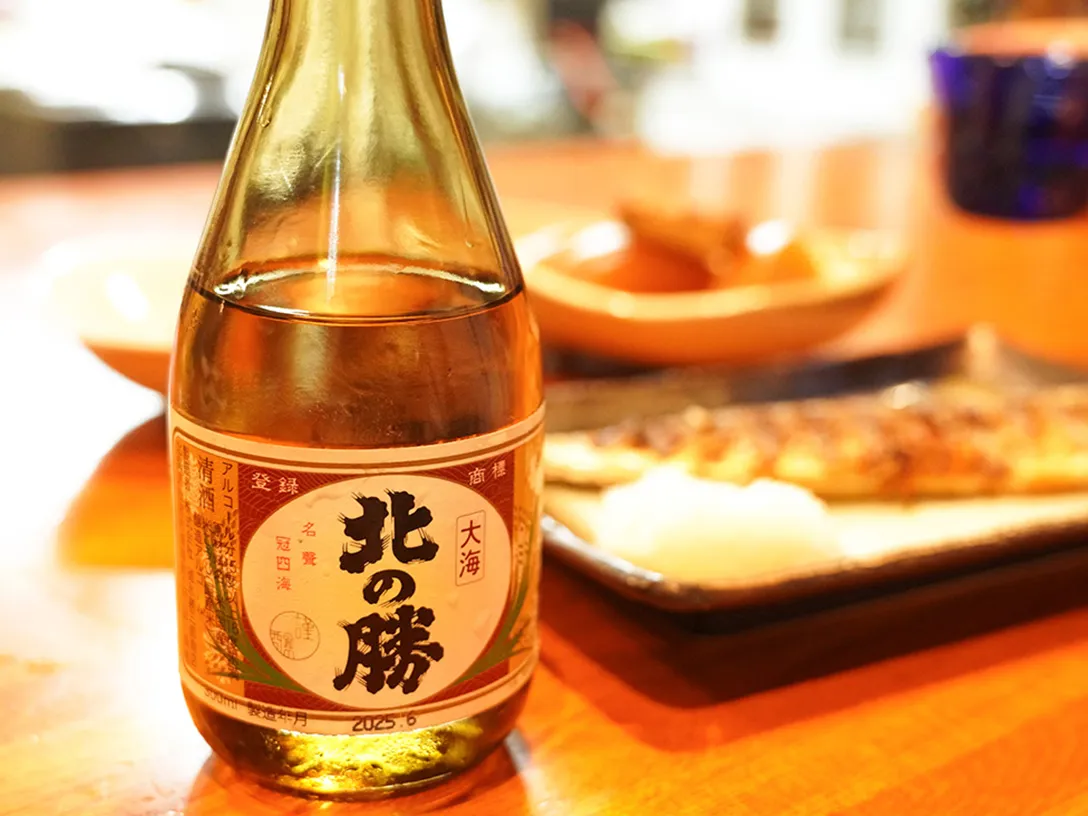
That evening, I savor the seafood of Nemuro. Seasonal fish served as sashimi, grilled specialties, and carefully prepared small dishes—this is, after all, one of Japan’s foremost fishing towns. Each bite offers flavors found only here, and I relish every moment of the meal.
Since I have come all this way, I decide to explore as far east as possible. My destination is Cape Nosappu, where you can watch Japan’s earliest sunrise. As I head east, the scenery gradually changes, opening out into wide grasslands. The harsh environment gives rise to a landscape that feels both stark and powerful, making it seem as though I am stepping into another world.

At last, I arrive at Cape Nosappu. A solid, white lighthouse stands tall, seagulls cry as they soar overhead, and beyond them lies an endless sea. Gazing at the rolling waves and reflecting on the journey, countless scenes come back to mind—each one encountered because I chose to travel by train. When the seasons turn, different landscapes will surely be waiting. Someday, I would like to return and explore this region again. And when I do, it will be aboard the Hanasaki Line, where Earth’s splendor unfolds.
